
Folding Tables:
A Practical Guide for Offices and Businesses
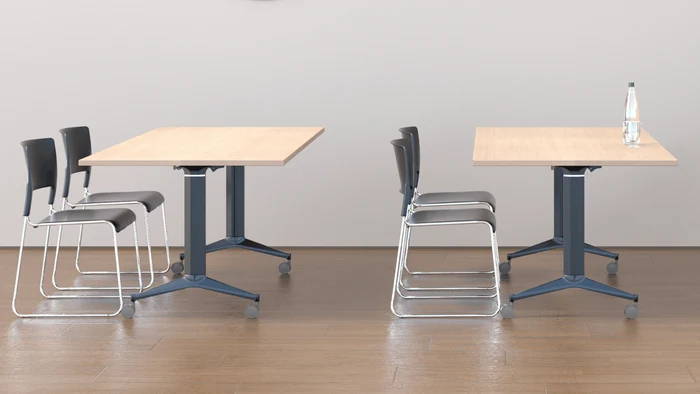
Folding tables are a practical choice for workplaces that need flexible furniture without permanently occupying valuable floor space. From meetings and training sessions to events and temporary workstations, the right folding table can help businesses make better use of their space.
But with different sizes, designs and folding mechanisms available, how do you choose the right one?
Here are a few things to consider when selecting folding tables for your workplace.
Why Choose Folding Tables?
Folding tables offer flexibility for businesses with changing space requirements. They can be set up when needed and stored away when the space is used for something else.
Some of their key benefits include:
- Space-saving design: Fold tables away when they are not in use to free up floor space.
- Flexible layouts: Arrange tables in rows, groups or different configurations to suit meetings and activities.
- Versatile use: Use them for training, presentations, workshops, events and temporary workstations.
- Practical storage: Folding designs make it easier to store tables between uses.
For offices, schools, community spaces and event venues, folding tables can be a useful addition to everyday furniture.
Choosing the Right Folding Table for Your Space
Before purchasing folding tables, consider how they will be used and how much space you have available.
1. Consider the Table Size
The right table size depends on the number of people using it and the available room space.
Smaller folding tables can work well for individual workstations or compact meeting areas.
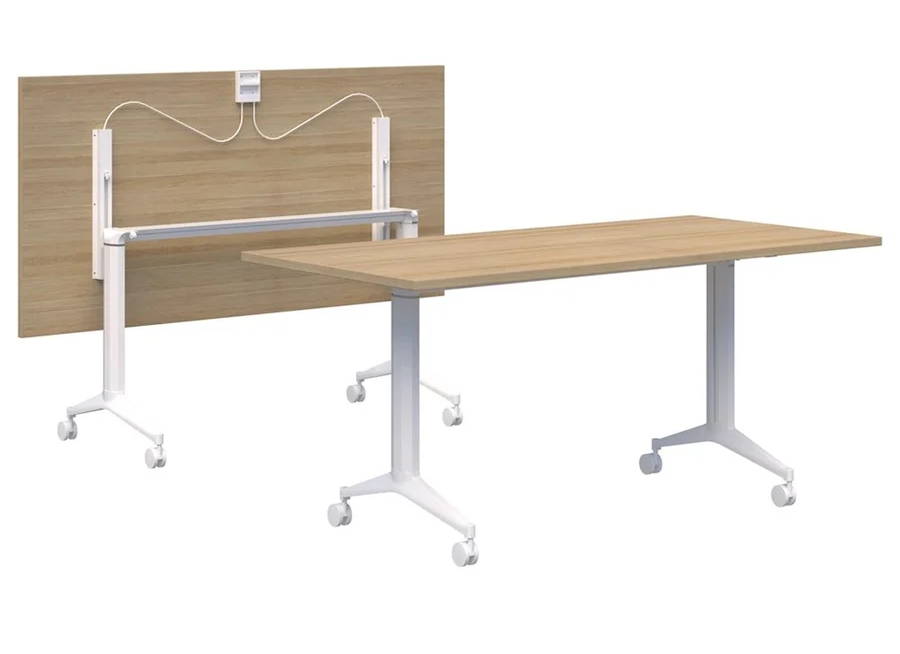
Larger rectangular tables are useful for group meetings, training sessions and shared workspaces.
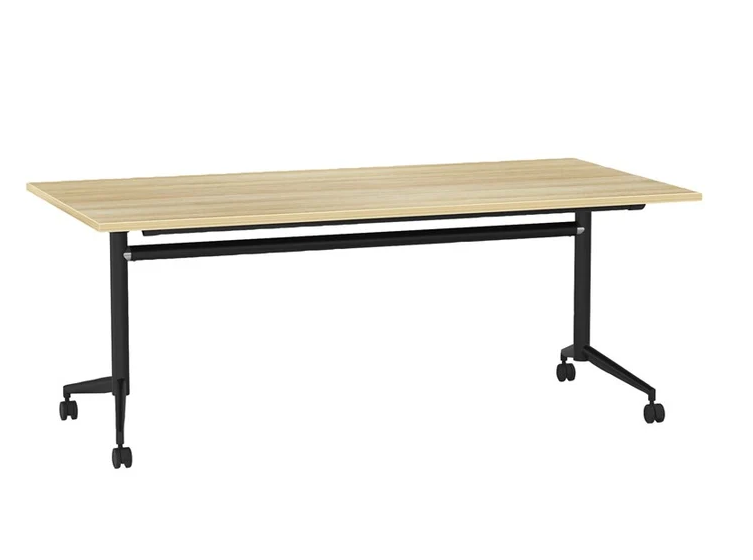
Measure your room and allow enough space for chairs and people to move comfortably around the tables.
2. Choose a Table Shape
Different table shapes suit different activities.
- Rectangular folding tables: A versatile option for meetings, training rooms and classroom-style seating.
- Round folding tables: Useful for group discussions and collaborative activities.
- Flip-top tables: A practical choice for meeting and training rooms where tables need to be rearranged or stored regularly.
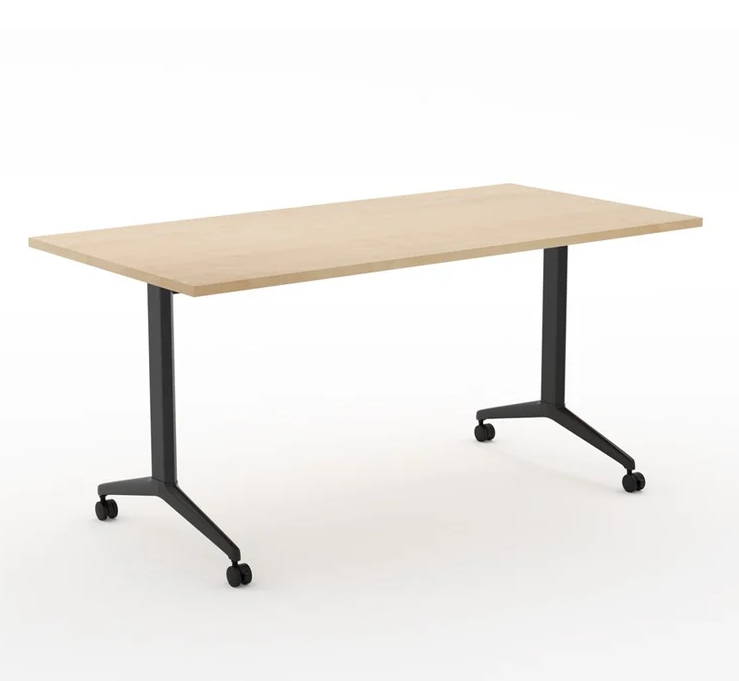
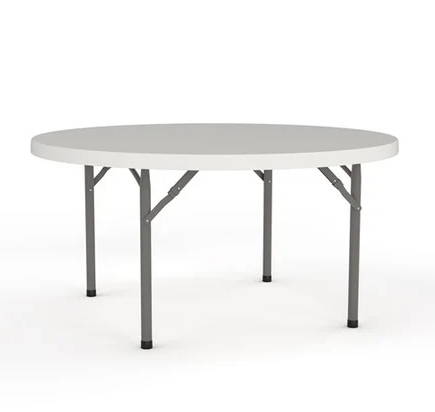
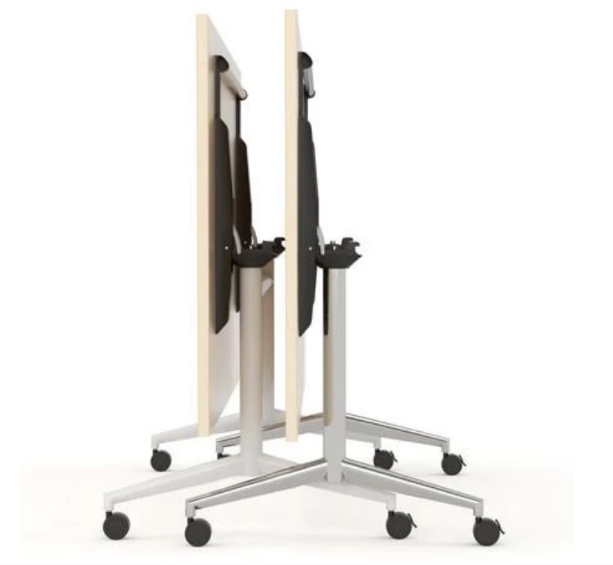
Consider how the table shape will affect seating, movement and the overall layout of your space.
3. Think About Storage and Portability
If your tables will be moved or stored frequently, consider their folded dimensions, weight and folding mechanism.
Flip-top tables can be particularly useful in multi-purpose rooms because the tabletop can be folded vertically, helping reduce the space needed for storage.
For larger quantities, consider how the tables will be transported and whether your storage area can accommodate them safely.
4. Match the Table to Its Intended Use
Different workplaces have different requirements.
For example:
- Office meetings: Choose a size that provides enough room for laptops, documents and other meeting materials.
- Training rooms: Consider rectangular flip tables that can be arranged in rows or groups.
- Events: Look for practical, versatile tables that can accommodate different activities.
- Shared workspaces: Choose tables that can be set up for temporary workstations and stored when no longer needed.
Thinking about how the tables will be used each day can help you select a suitable option.
Find the Right Folding Tables for Your Business
Whether you are furnishing a meeting room, setting up a training space or looking for flexible office furniture for a multi-purpose area, choosing the right folding table can make your space easier to manage.
Commercial Traders offers a range of folding and flip tables in different sizes and styles to suit modern business environments and commercial office furniture setups.
Explore our to find a practical option for your workplace.
 Address36 Alfred Street, Onehunga, 1061

You are in advanced mode.
You can turn it off in left sidebar. To use advanced options, you will need to enter your own Google Maps API Key.
Get Google API Key